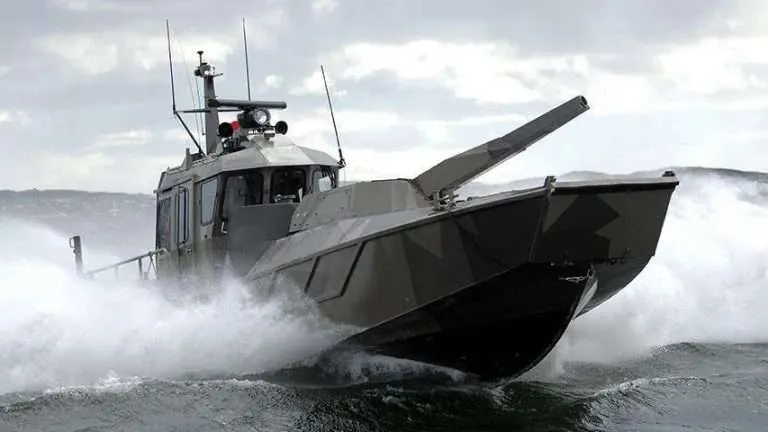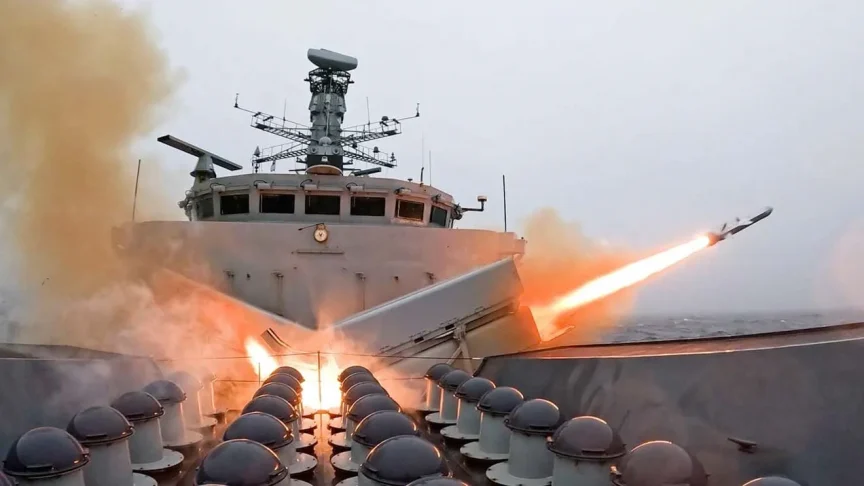
HMS Portland and a Wildcat helicopter fired the two missiles at decommissioned USS Klakring during Exercise Atlantic Thunder off northwest Scotland, the Royal Navy said.
Royal Navy press release:
The potency of two of the Royal Navy’s newest ship-busting missiles was confirmed in landmark firings with United States allies against a specially prepared ex-US Navy warship in the North Atlantic.
HMS Portland unleashed her ferocious Naval Strike Missile (NSM) while her Wildcat helicopter from 815 Naval Air Squadron let rip with Sea Venom missiles at decommissioned frigate USS Klakring at the MOD Hebrides range off the northwest coast of Scotland during Exercise Atlantic Thunder.
Plymouth-based Type 23 frigate HMS Portland pummelled the target during the first Royal Navy firing of an operational NSM, an advanced warhead that can travel close to supersonic speeds and strike targets more than 100 miles away, evading detection by skimming the sea.
The Wildcat, operating from the flight deck of HMS Portland, smashed the Klakring with its own powerful missiles – completing the first live firing of an operational Sea Venom from a Wildcat against a realistic target.
Lieutenant Commander Louise Kirkaldy, HMS Portland’s Principal Warfare, said: “The successful firing of NSM marks a significant milestone for the Royal Navy, demonstrating our ability to deliver credible, modern maritime strike capability.
“This achievement reflects the professionalism, dedication and teamwork of all those involved, whose hard work has ensured we remain ready to meet the challenges of today and tomorrow.”
Petty Officer James Kenyon, an Above Water Warfare specialist on HMS Portland, added: “To be involved in such a high-profile exercise is the highlight of my career.
“Being the first person to fire war-shot NSM and achieve a hit is a very proud moment, and one that will stay with me for the rest of my career. This was the culmination of over a year’s effort in planning and bringing the drills into service, and I am glad that I was able to contribute.”
📌@RoyalNavy said HMS Portland made the Navy’s first operational NSM firing during Atlantic Thunder.
📌A Wildcat also made the first live firing of an operational Sea Venom against a realistic target.
🔗https://t.co/iWY9jAWJhQ pic.twitter.com/wvaIneHzNX
— Defensehere (@defensehere_en) September 29, 2026